
Music & Science
Ready to make lots of notes from "Music, Science, & Natural Magic in 17th Century England" by Penelope Gouk of Manchester University - a book that re-establishes the old link between science and music © D.C.Procter
“I call architecture “petrified music.”
~ Johann Wolfgang van Goethe, letter to Johann Peter Eckermann (Mar. 23, 1829)
What influence did music have in the domains of natural magic and early modern experimental science?
I'm re-reading "Music, Science, & Natural Magic in 17th Century England" by Penelope Gouk to remind myself of this intriguing question.
In recent times the metaphor of vision has dominated science but according to Gouk's book this was not always the case and she describes the fascinating early beginnings of science when it was called “natural philosophy.”
These early experimenters designed instruments as the first attempts to explain the universe in what has been called the “Naturalisation of the marvellous.”
Many of these early experimental philosophers were themselves musicians, such as Fludd for whom the practice of music was a step “towards true philosophical knowledge and divine illumination.”
The image is of the lone experimenter who sought to discover universal truths for either his own personal use or for that of an elite master.
Often music was the source of metaphors used to represent hidden phenomena that could neither be seen or easily put into words. For example the sympathetic resonance between the strings of two instruments was a metaphor frequently used as a way to understand and control unseen forces.
In the late 16th century and early 17th century the tradition of new experimental philosophy was developing out of the earlier tradition of natural philosophy, and natural philosophy itself developed out of the tradition of the natural magician searching for truths and the undiscovered laws of the universe.
It was only later with the new experimental philosophy that figures like Isaac Newton (1642-1727) searching for underlying structures would begin to draw on maths as a language to reveal the unseen. Before that the properties of bell, lutes, trumpets, and keyboards were frequently used as musical models to describe the functions of the body.
As pointed out by Gouk, the paradox and perhaps the break with the prevalence of the use of musical models came when polyphony was introduced - it was one thing to listen to one instrument and imagine a universal harmony and cosmic order, but this order was under threat when more than one instrument played together. The practice of tuning and temperament had to be introduced as a way to compensate. It was one thing to imagine universal models linked to antiquity such as Apollo - God of Harmony and Cosmic Order with his association with the lyre - an association that court magician John Dee (1527-1608) frequently used - however, put two lyres together and there was a problem. The cosmic order appeared to break down and new models were needed.
A fascinating world of information for which I am grateful to Oscar Edelstein (composer) and Manuel Equia (Physicist) with their research and creation of Sala Cristal Sónic (Sonic Crystal Room) based at the Universidad de Quilmes and receiving both arts and science funding.
Deborah Claire Procter
[taken from notes forming a longer article (2013)]
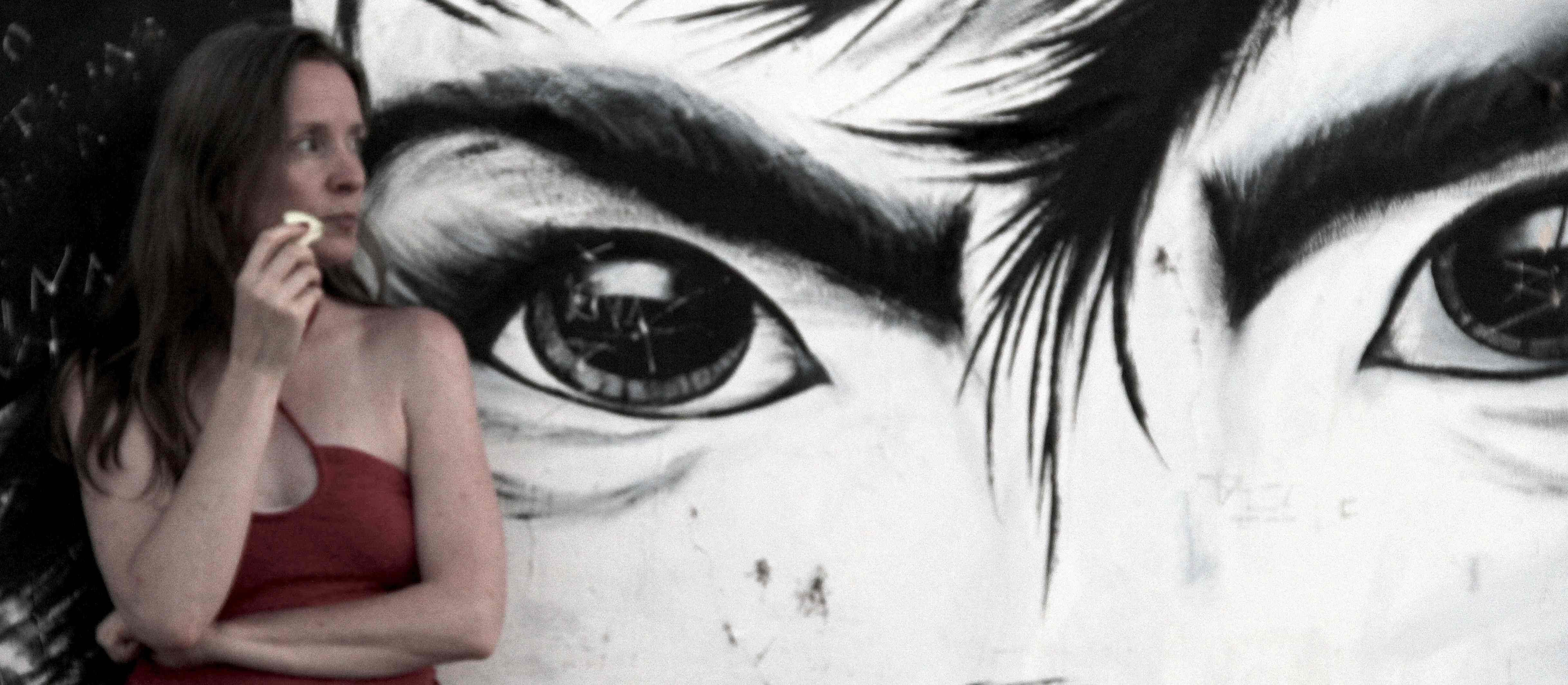
© Max Edelstein
Deborah Claire Procter FRSA
Multimedia Artist | Podcaster | Author



Created with ©systeme.io